
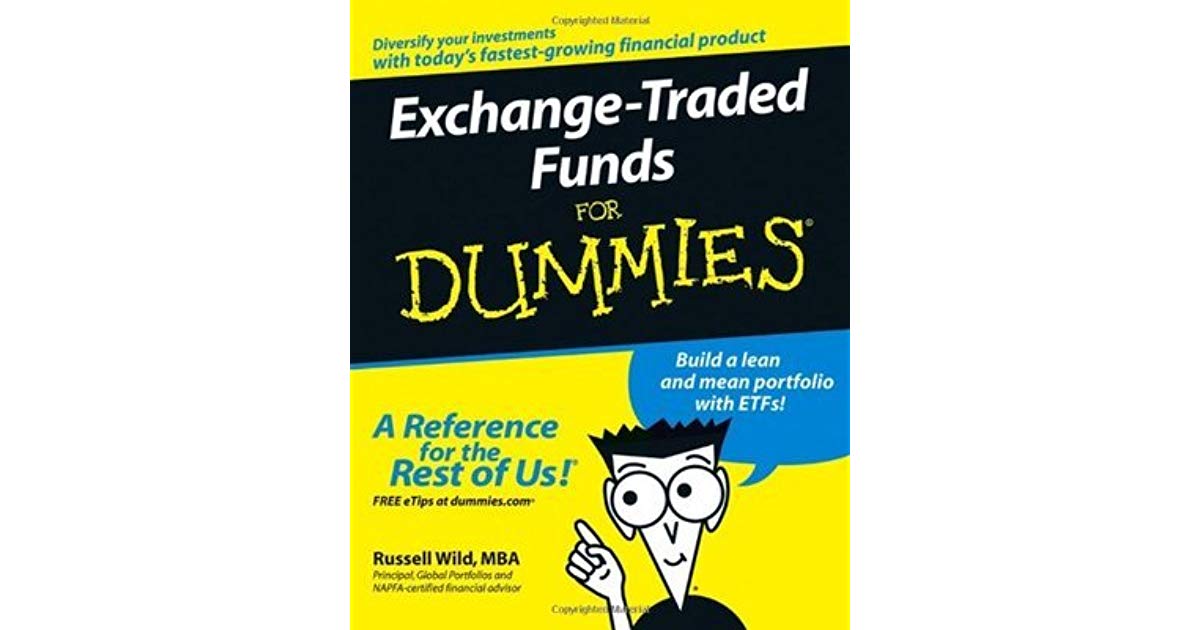
This has been an interesting book. Wall Street has invented many ways to rip people off over the years, it’s my belief ETFs lesson those chances. Mutual funds have 2 inherent disadvantages. You buy them after the trading day not knowing at what price you are buying them. A lot can happen between noon and 3 pm. Their other downfall is their expense ratio. It averages around 1.6%. An ETF has an expense ratio around .06%. There’s no contest.
Wild’s book as per the title skips the mumbo jumbo of most financial books and cuts to the chase. He runs through all the ETFs that were available in 2007 and the most common investing styles. He covers diversification and portfolio mix of stocks versus bonds. He covers the domestic market as well as the international. Large cap versus small. Sector investing. All the basic need to knows.
The trouble is, the 10 plus years of hindsight we have since the book was written in 2007. In the same way the financial shows on TV do perfectly at predicting yesterday, I get to do the same with Wild’s book. A lot of his advice was based on the investor being forced to pay commissions for the trading he would do. That went out the window several years ago with Vanguard and their commission free trading. That changed everything.
Another glaring example was a sample portfolio he had on page 234 for ‘Richard and Maria’, age 65 and 58. Richard at age 65 is “at” retirement. And the portfolio Wild developed for Richard has him with a 42% exposure to the stock market. In the fall of 2007 the warning signs were there of the coming collapse of the market in 2008. Unless you were comatose then you’ll remember the equity market lost 45% of its value. If anyone saw that train wreck coming, they didn’t tell me.
That means Richard would have lost roughly 1/5th of his portfolio virtually overnight.
That’s a lot. Using the conventional ratio, the maximum market exposure for Richard at age 65 would have been 35%. The global financial crisis lesson of 2008 gives credence to a much more conservative stance going into retirement. The stock market doesn’t always go up! 20/80 isn’t unreasonable. Neither is 10/90 out of the question when approaching age 65. Some even go so far as 0% exposure to the stock market at that age, preferring to keep their money in bonds, CDs and Treasuries.
The important thing to remember is that in the end, no one is looking out for your interests. Their only interest in you is seeing how much money they can get out of you. No one was warning the small investor in 2007/2008 of the coming calamity. No one was warning that once the market hit bottom, that it was definitely not the time to get out. It was actually the time to plow every red cent you had into the market.
What we did learn from 2008 was that unless you were 100% into bonds, everyone got hosed. Small caps, large caps, value, growth, dividend funds, they all took a bath. International, domestic, they all tumbled. We found out from 2008 that with very, very few exceptions, the market moves in unison. You can take your grid, style and sector theories and toss them out the window. There are only 2 things that are going to help the small investor: Time (having 3 or 4 decades to let your money work for you). And buying low. Not buying the peaks. Scaling back when the markets are high, and plowing everything you have into them when they are low. Buy low – sell high.
That’s all it comes down to. You can take all your fancy business channel advice, magazine articles, books, experts and everything else and toss them out the window. Your portfolio isn’t going to go up unless the whole market is going up. And if the market is going down, everything is going down. Buy the dips and don’t get within 10 years of retirement without knowing exactly what you’re doing. Stay away from the dogs like American Century, and stay with the winners like Vanguard and T. Rowe Price.
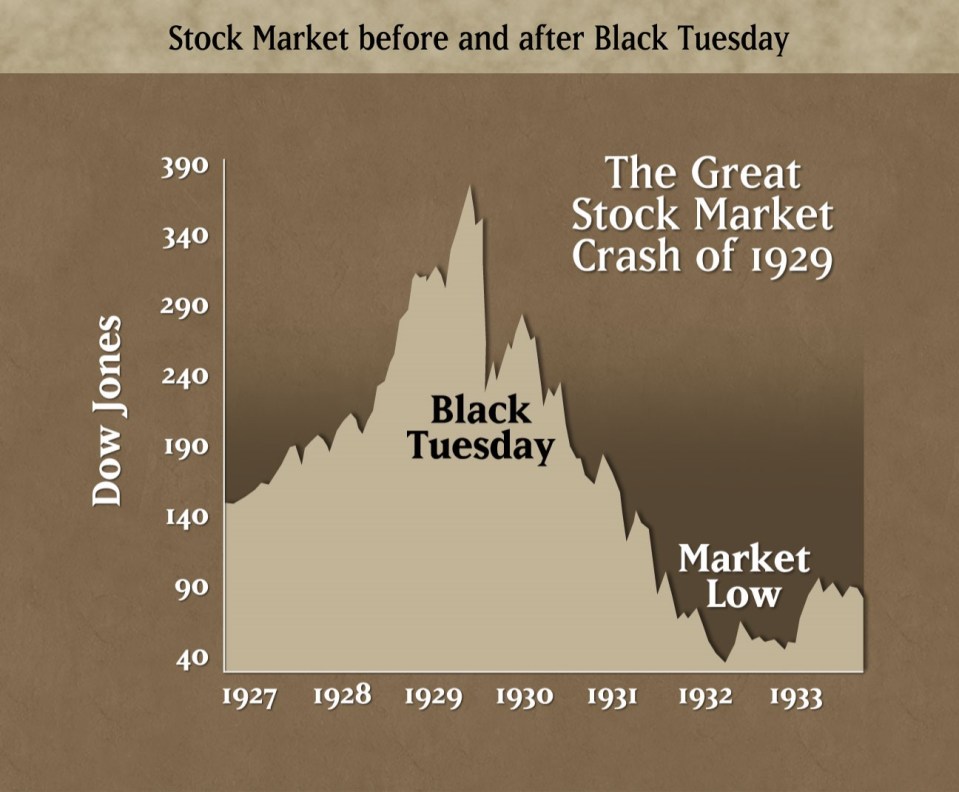
This graph illustrates the history of the stock market perfectly. In 1929 everyone was investing in the market (that should make you nervous). They were buying the peak. When it crashed and hit bottom in 1932/33, everyone got out! They had put in all their money at the top, and had nothing to put in at the bottom (when they should have been buying). ’32 and ’33 were buying opportunities! Not to be feared, but embraced! Just like 2008 and 2009. That’s the time to buy, not sell. Those opportunities only come once or twice in a lifetime. If you had listened to the experts, you missed it. In fact some people believe the sharks manipulated events then for the exact purpose of fleecing the flock.

