
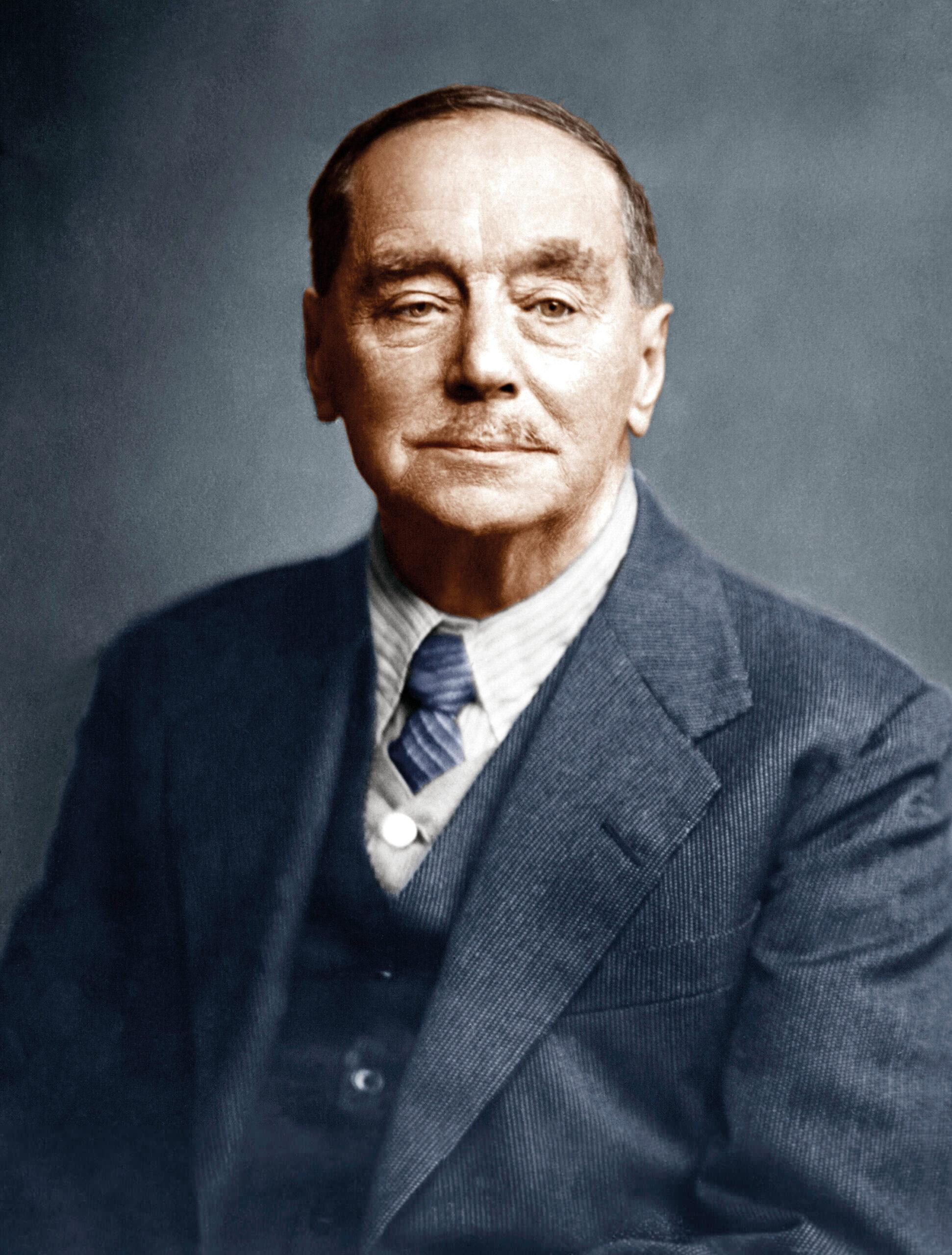
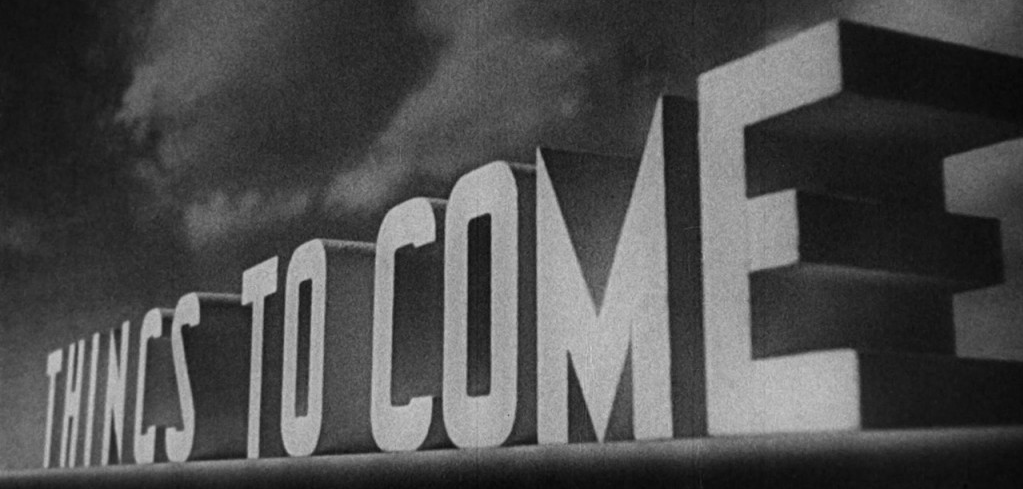
H. G. Wells (Sept. 21, 1866 – Aug. 13, 1946). As soon as this came on TCM I knew we had a winner. This 1936 movie was titled ‘Things to Come’. It was written in 1933. Its about a World War that brings about the collapse of civilization. I started looking at the dates “1933”, and the author “H. G. Wells”, and I thought, “He saw what was coming!” I’m glad he lived to see the end of WW II. I’d hate for him to have died on a depressing note.
If the man wasn’t a genius, he sure pretended well. A member of the Fabian Society, it was interesting to note that in 1939 he wrote ‘The New World Order’. “Fabian Society: The Future of the Left Since 1884.” The ‘Left’ is a misnomer. These folks figure themselves to be the top of the pyramid, there is no “right or left” there. They simply use the left as their army. The rank and file lefty are simply useful idiots to them.
On the IMDB page for the movie they have several interesting quotes about this movie and the state of movies in general. “The story of a century: a decades-long second World War leaves plague and anarchy, then a rational state rebuilds civilization and attempts space travel.” “Before filming started, author H.G. Wells told everyone connected with the film how much he’d hated Fritz Lang’s film Metropolis (1927) and how he wanted them to do the opposite of what Lang (whom he called “Lange”) and his crew had done.”
“Still, the film clearly illustrates a future that will eventually occur — one where some people put all their trust and faith in our modern marvels — while others left powerless and impotent by these modern marvels ask whether this progress was worth the price.” It was said there that Einstein dreamed of an “intellectual cinema”, and was thrilled with this release. As they say, Hollywood in the 30’s was only capable of “costume epics” and crime dramas from Warner Brothers.
Wells’ Utopian socialist tendencies really come out towards the end of the film when the enlightened super race rebuilds humanity after the folly of their decades long war. The intellectual heft of England during this period is very evident. Through their writing and film making. They leave the United States in the dust. A contemporary and fellow Englishman of his I can’t avoid mentioning, George Orwell (1984). Both being a particular strain of socialist that is in no way a fan of Marx or the USSR.
They are coming to the crux of the film where the advanced race has built this incredible civilization and is about to attempt their moonshot, when the leftover war mongers are about to break out of their prison and stop the “progress”. Man vs Machine.
Wells (The Time Machine, War of the Worlds, The Invisible Man) could definitely see the future, or rather parts of it. But the part I can’t figure out is why both he and Orwell, being geniuses, buy into this socialism crap? You could just see their mouth watering as the advanced super race brought about a perfect future through gentle force. Central planning. “You will enjoy Utopia, even if it kills you.” I can only assume neither Wells nor Orwell had the Divine spark. It is the only way I can account for their lack of wisdom.
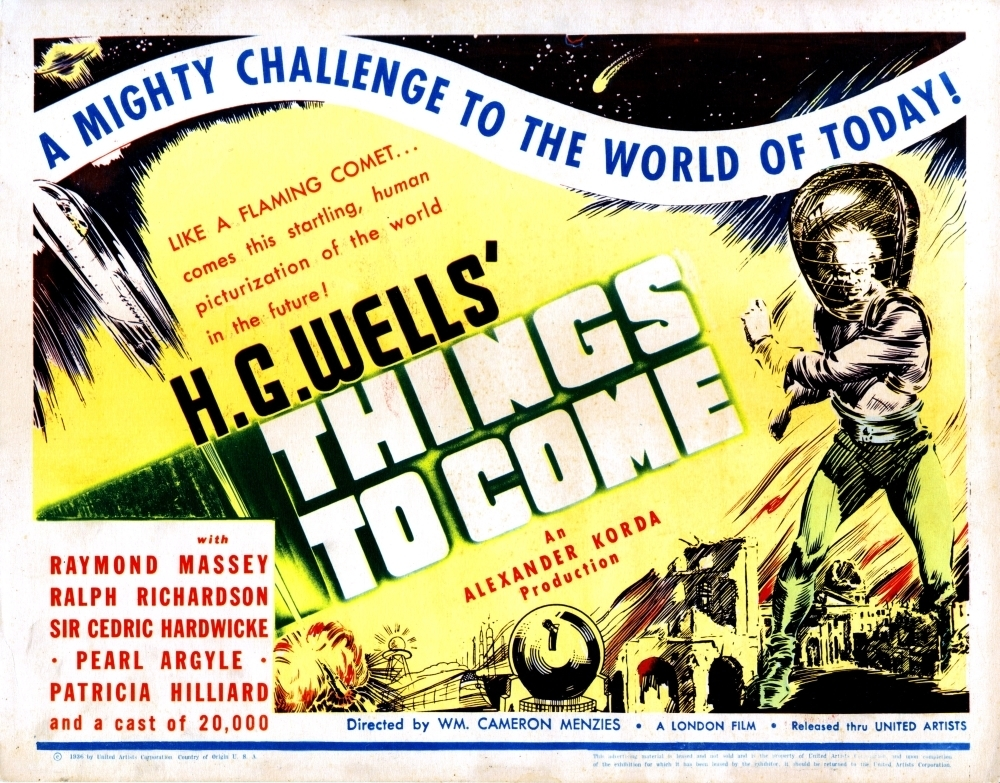
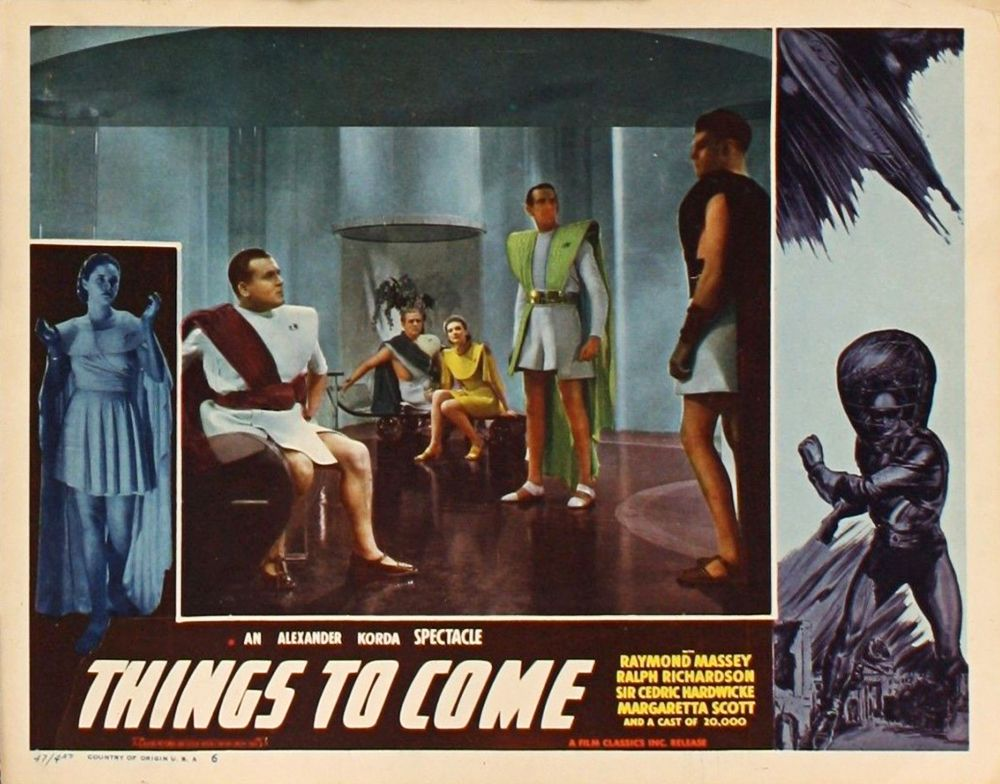
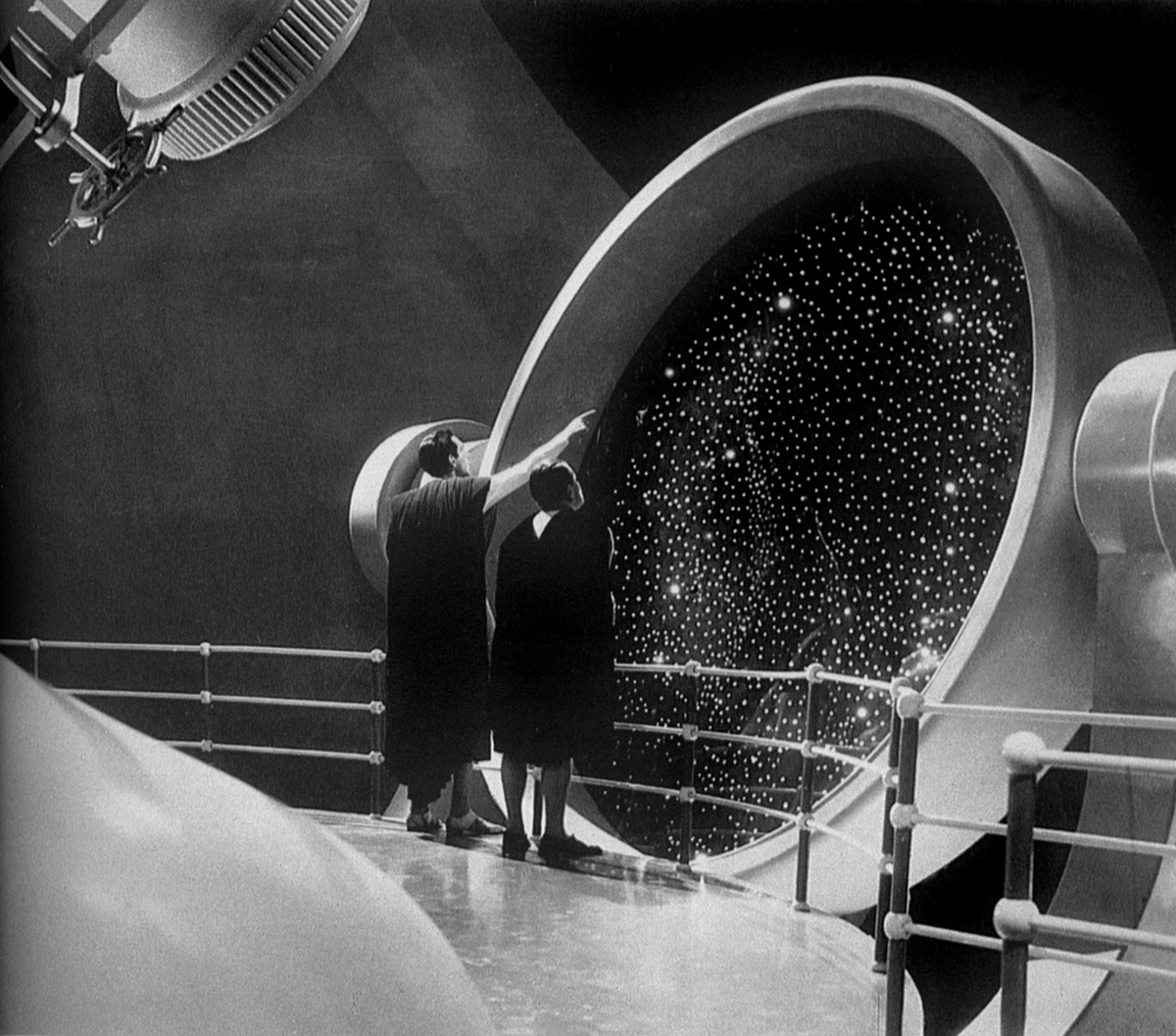
The special effects of their ‘NASA’ facility and rocket ships, for 1936, is incredible.
 Iowa life
Excellent take! This is an underappreciated movie.
Interesting that you have seen it. I was trying to type and write at the same time so I’m sure I missed a bunch. If you’d like to, throw down some thoughts on it, or how you interpreted it. My thoughts were just a jumble of ideas, nothing coherent. That night on TCM they showed the 1951 Hollywood version of science fiction, When Worlds Collide. Fun, but it didn’t begin to get thought provoking like England’s idea of science fiction. You know HG Wells was NOT a fan of Metropolis. I don’t begin to understand that one either, but I do know parts of it were a visually stunning.
Thanks! Let me collect my thoughts and I will be back to add them.
It’s been a while since I saw this movie, but as I recall, I found it rather depressing. But there is no doubt that H.G. Wells and George Orwell were both brilliant men. Wells was a scientist who accurately predicted many scientific discoveries and social events, but he was in conflict with the Fabian Society, even though he was a member. Although he believed that the Soviet Union had made the correct choice in its Russian Revolution and supported a state-controlled society for the benefit of mankind and scientific discoveries, he drew the line at totalitarianism of the Stalinist type ( even though Lenin was no better). He called himself a Democratic Socialist, like George Orwell, who was much clearer in his predictions and condemnation of totalitarianism. As we have seen here in the United States with Bernie Sanders and friends, Democratic Socialists like to pretend that they are fairer and more democratic than their Communist counterparts, but they are just as totalitarian when it comes down to it. It’s impossible to be a socialist and support a government-controlled state without eventually falling into totalitarianism. I guess people have to experience it before they understand that.
I’m glad you were able to fill in my gaps of understanding. Yeah I don’t see how Wells and Orwell could not see that freedom would satisfy everyone’s needs much better than central planning. I wonder if they didn’t look at the corruption and monopolies of the late 1800’s and confused that with actual free markets, and determine that “capitalism” was bad. Oh yeah it could be a little depressing! Now that I think about it, what I liked best about it was the artwork and special effects, and how thought provoking it was. It violated my 3rd rule for movies in that it did not have any likable characters or ones that you could empathize with. Later that night they showed the American 1951 movie: When Worlds Collide, and even though it was 15 years later, it didn’t have NEAR the special effects of this British film. And so much of Worlds Collide was the romance with Barbara Rush’s character. (I’ve just always liked Wells since Time Machine and War of the Worlds)
I LOVE the original Time Machine and War of the Worlds! I’m not sure if I’ve seen When Worlds Collide. I will have to look it up. Thanks!